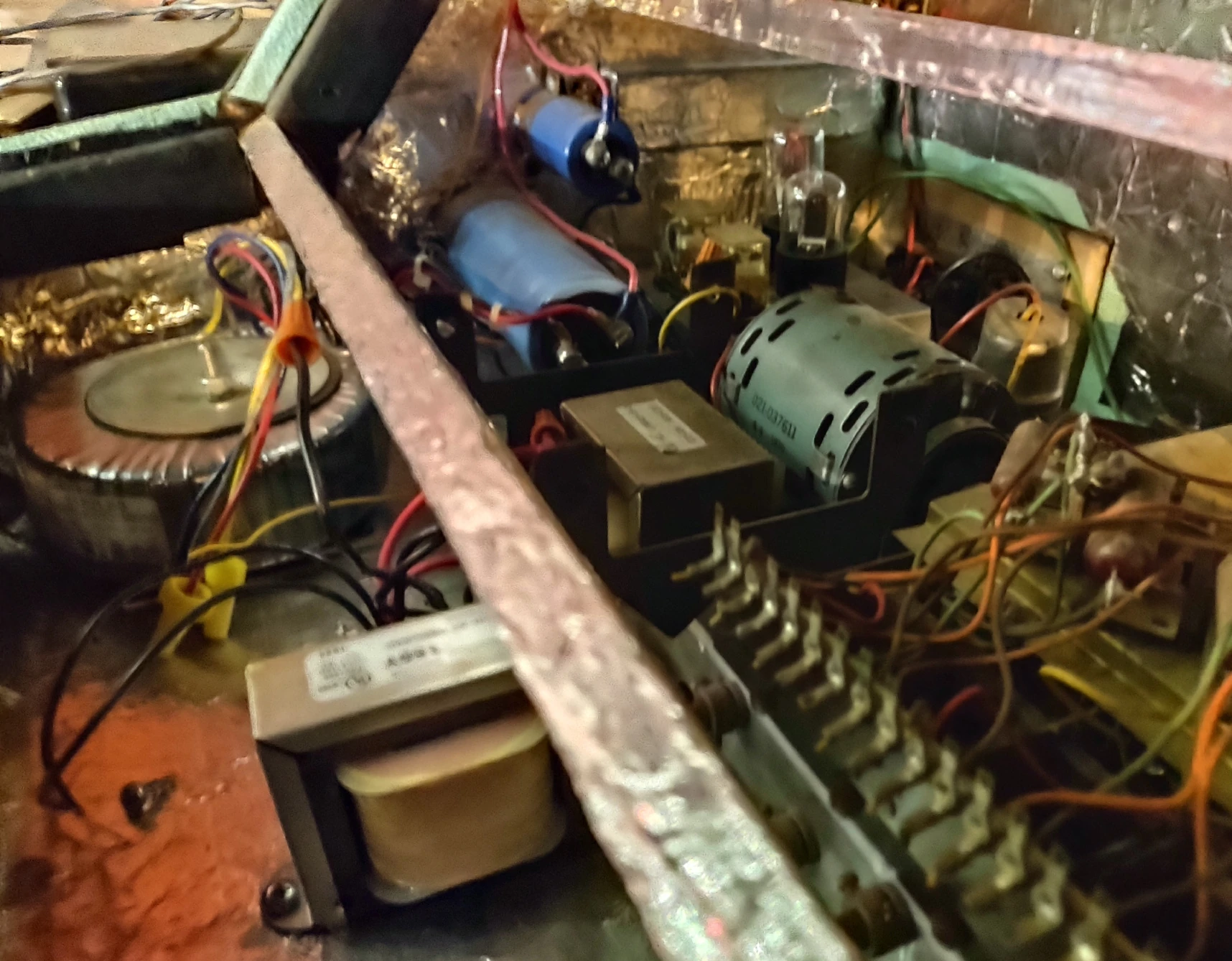
My dad and I were out thrifting one day, and we found a Hammond T-412 for free. We happened to have the trailer with us, so we couldn't resist. The highly-neglected instrument had been sitting outside the thrift shop for some time, it had become the home to a family of mice, and it reeked of cigarette tar. I got it cleaned up best I could and it actually still worked! All the electronics amazingly were fine. I did re-cap the power supply. The T series still uses the tone wheel generator, but with solid state electronics. Fast forward a little bit, and the time the organ spent in the sun caught up to it. The part of the keys where they mount to the metal contact lever became brittle and the keys began to fall off. It wasn't really feasible to repair (or replace) the key bed, so I decided to disassemble and part out the organ. I made standalone units with the built in leslie and drum machine (both of which I have used in some of my recordings). But I was also left to deal with the gargantuan mechanical heart of the organ, the tone wheel generator. That's when I had the idea for the drone organ.
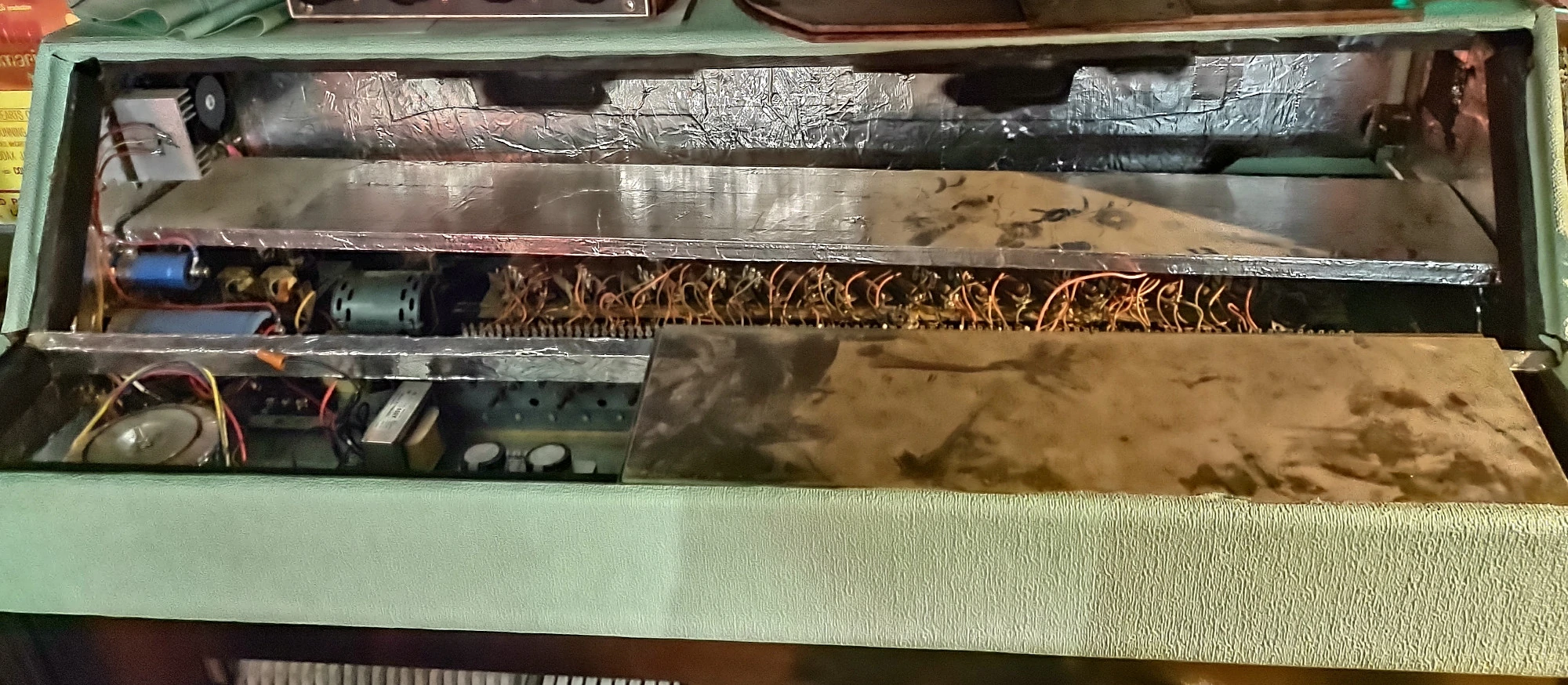
The main concept of the drone organ is such: the ability to simultaneously and individually control the levels of 73 chromatically tuned sine waves. The tone wheel generator provides all of the tones simultaneously, locked to the frequency of the mains voltage. Running the motor off of a variable-frequency-drive allows for pitch bending with a long glide time. The motor can also be shut off to create a wind-down effect. Each tone wheel pickup is connected to one leg of a variable resistor, with the other leg to ground. The wiper of each one goes to a summing mixer.
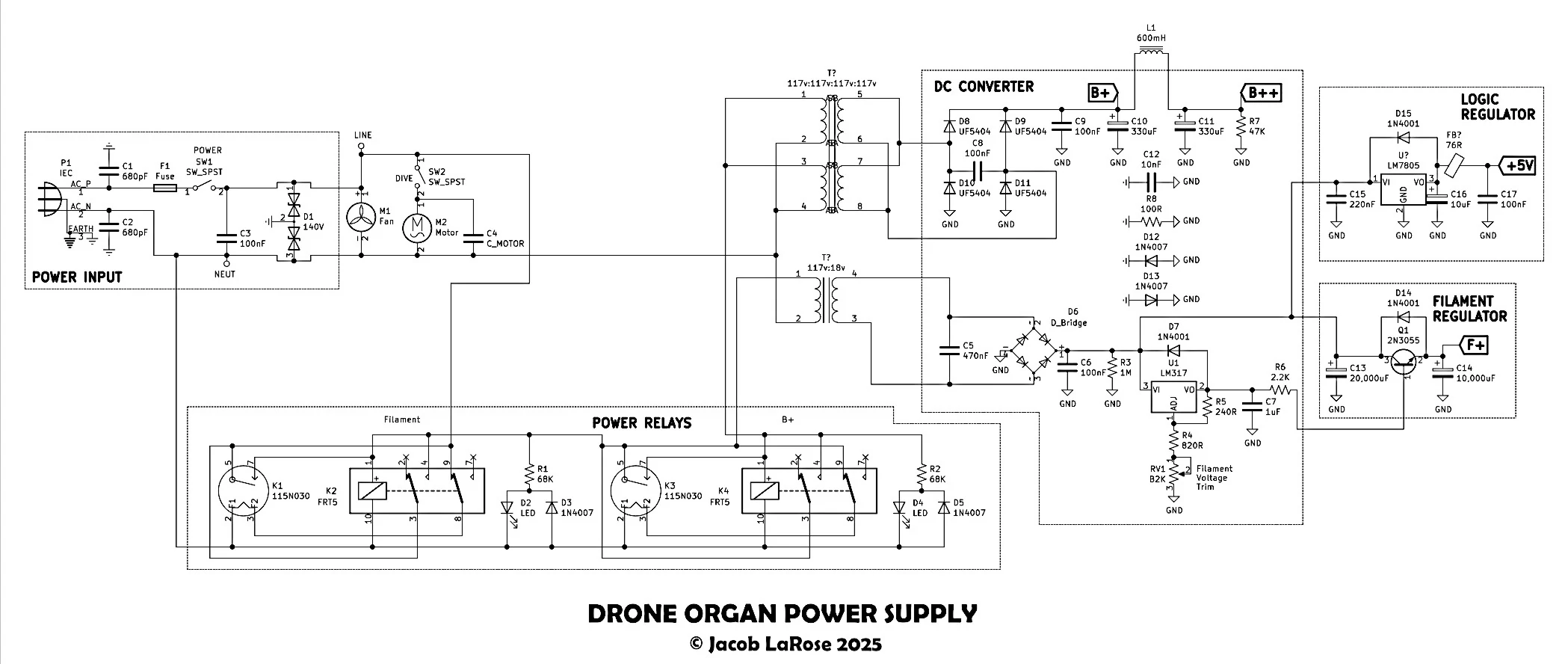
The power supply is controlled by two time-delay relays. When power is first turned on, the tonne wheel motor and the fan spin up. Thirty seconds later, the heater voltage relay turns on. Thirty seconds after that, the main power relay switches on. The reason for this power sequencing is to avoid drawing too much surge current on startup. The heater power circuit utilises an ac-dc converter and a rudimentary voltage regulator to provide a stable, clean power source for the tube heaters.
Stay tuned...